Software Development Life Cycle (SDLC): 7 Stages, Models & Decision Gates
 Alexander Koval · Updated · 12 min read
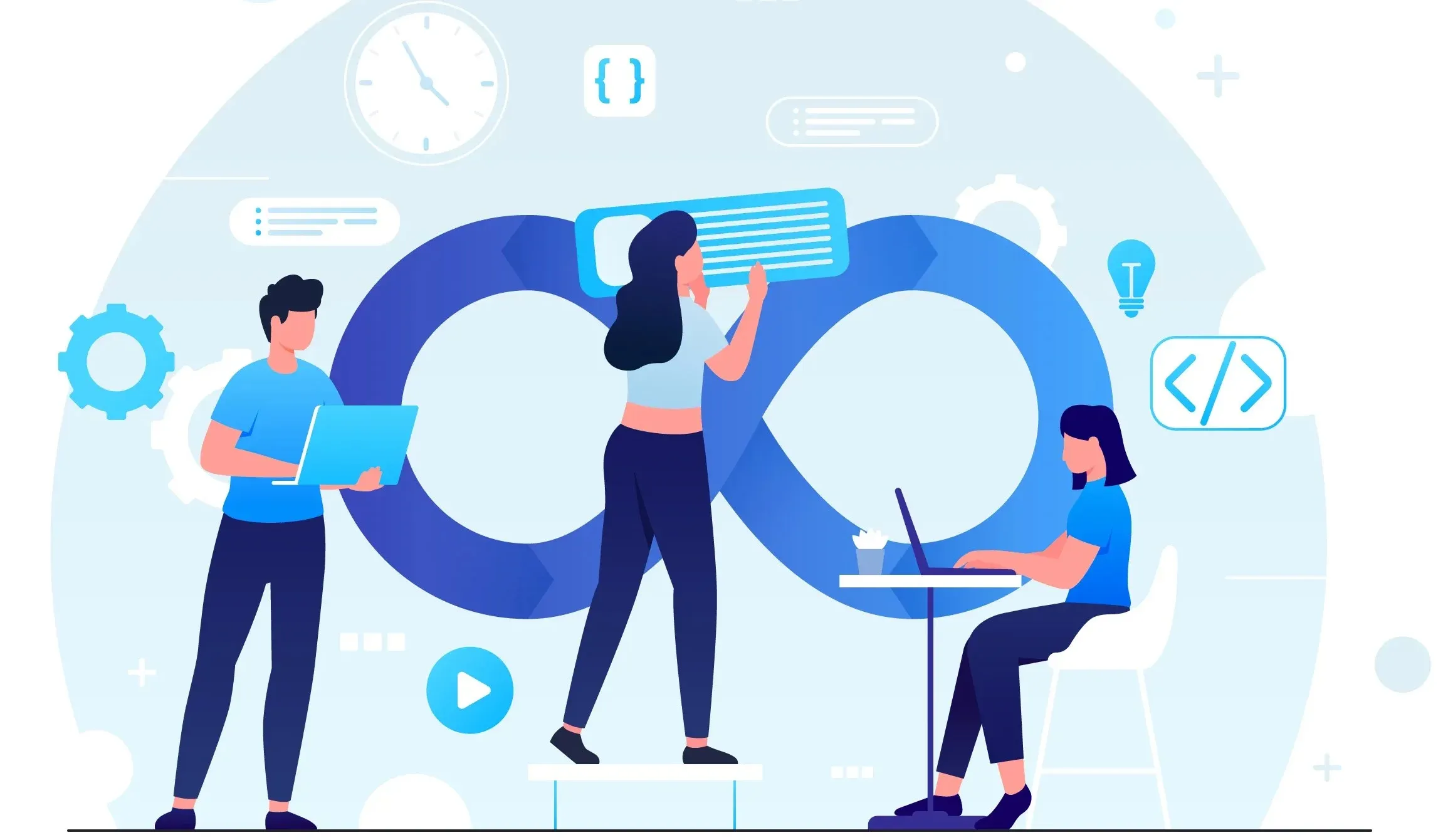
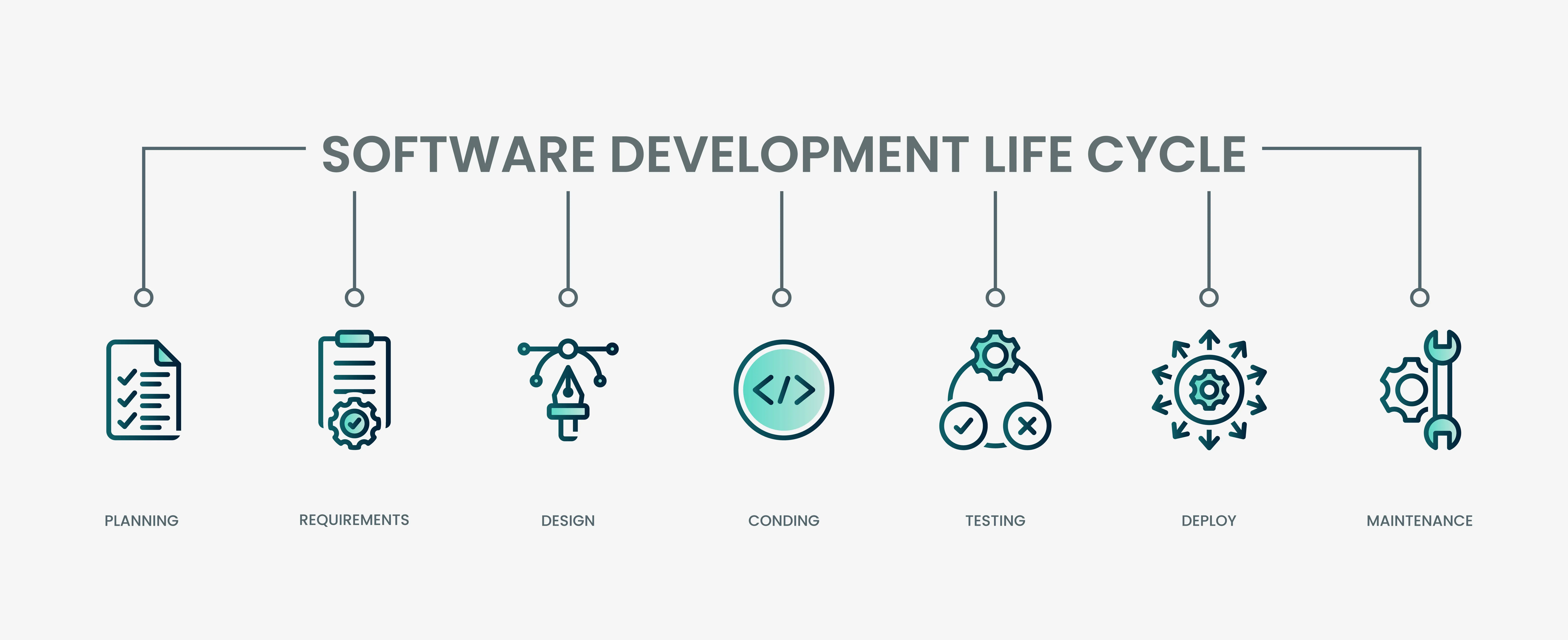
The Software Development Life Cycle (SDLC) is a structured process for planning, designing, developing, testing, deploying, and maintaining software. SDLC frameworks are commonly described as having six or seven stages; in this guide, we use seven: Planning, Requirements Analysis, Design, Development, Testing, Deployment, and Maintenance.
At Codemasters International, we find it more useful to treat those stages as decision points rather than a checklist. Each stage should reduce a specific type of uncertainty before the team commits more time, budget, or engineering effort.
The 7 SDLC Stages at a Glance
| SDLC stage | Main decision | Evidence before moving forward | Typical roles |
|---|---|---|---|
| 1. Planning | Is the project viable and worth pursuing? | Business objective, scope, success criteria, major risks | Product owner, project manager, stakeholders |
| 2. Requirements Analysis | Do we understand what users and the system need? | Prioritized requirements, acceptance criteria, technical and business constraints | Business analyst, product owner, stakeholders |
| 3. Design & Architecture | Do we have a viable way to build the solution? | Architecture, data and integration design, prototypes, key technical decisions | Software architect, tech lead, UX/UI designers |
| 4. Development | Does the implementation meet the agreed standard? | Working code, reviews, automated checks, completed acceptance criteria | Software engineers, tech leads |
| 5. Testing | Is the remaining risk acceptable for release? | Functional, integration, security, performance, and acceptance evidence | QA engineers, developers, product owner |
| 6. Deployment | Can the software be released and recovered safely? | Release plan, migration strategy, monitoring, rollback path | DevOps, engineers, release manager |
| 7. Maintenance & Evolution | What should production feedback change next? | Incidents, usage data, user feedback, prioritized improvements | Engineering, product, support, operations |
Responsibility varies by organization and methodology, but the same broad pattern appears across traditional and Agile teams: business and product roles dominate early decisions, architecture and engineering own technical design and implementation, QA contributes to validation, and engineering/operations remain involved after deployment.
Why Is the Software Development Life Cycle Important?
SDLC matters because software becomes more expensive to change as assumptions turn into implemented systems, integrations, migrated data, and production dependencies.
A structured lifecycle helps in four practical ways.
It reduces expensive rework. Clarifying requirements, workflows, integrations, and technical constraints before major implementation lowers the likelihood of discovering fundamental misunderstandings after substantial engineering effort has already been spent.
It improves planning and cost visibility. Defined stages, responsibilities, deliverables, and decision points make scope, resource requirements, progress, and project risks easier to evaluate.
It surfaces technical and security risks earlier. Architecture reviews, continuous testing, security validation, and deployment planning allow teams to address problems before they become production incidents.
It keeps stakeholders aligned around measurable outcomes. The lifecycle creates clear points where business, product, engineering, QA, and operations can verify what has been learned and decide whether the project is ready for the next commitment.
These benefits - better planning, visibility, risk management, cost estimation, and systematic delivery are central reasons organizations use an SDLC framework.
1. Planning

Planning establishes the business problem, intended users, scope, feasibility, constraints, and success criteria.
Typical work includes stakeholder discussions, initial cost and resource estimates, technical feasibility analysis, dependency identification, and early risk assessment. The goal is to establish enough context to decide whether and how the project should proceed.
Decision Gate
Before committing heavily to requirements, architecture, or engineering, the team should understand:
- The intended business outcome
- The primary users
- Initial scope boundaries
- Major technical or operational constraints
- How success will be evaluated
- Which assumptions still create meaningful risk
Common Failure Mode
Solution-first planning: the team defines a feature list, architecture, or delivery schedule before validating the problem the software is supposed to solve.
2. Requirements Analysis

Requirements analysis converts business objectives and user expectations into specifications that design, engineering, and testing teams can work with.
Useful requirements extend beyond features. They may cover workflows, roles and permissions, business rules, integrations, data, performance, security, reliability, compliance, and acceptance criteria.
Traditional projects may consolidate this knowledge in a Software Requirements Specification. Agile teams often distribute it across backlogs, user stories, acceptance criteria, prototypes, and technical documentation.
Decision Gate
Requirements are mature enough when designers, engineers, and testers can interpret expected behavior without repeatedly guessing what stakeholders meant.
Important uncertainties should remain visible instead of being hidden behind an approved document.
Common Failure Mode
Confusing approval with validation: a signed specification confirms agreement on a document, but it does not prove that the underlying workflow or user need has been understood correctly.
3. Design and Architecture

The design stage turns requirements into a technical and user-experience blueprint.
Depending on the project, this can include system architecture, component boundaries, databases, APIs, third-party integrations, infrastructure, security controls, user flows, wireframes, and prototypes.
The amount of design should reflect the cost of reversing a decision. Data ownership, core integrations, security boundaries, and foundational architecture usually deserve more attention than implementation details that can evolve safely later.
Decision Gate
Before major development begins, the team should know that:
- Critical workflows are understood
- Major dependencies are known
- The architecture supports current requirements
- Relevant security and scalability risks have been considered
- High-risk UX assumptions have been validated where appropriate
- Important technology choices have clear reasons
Common Failure Mode
Overengineering: adding infrastructure, abstraction, or complexity for hypothetical future requirements that do not justify the cost today.
4. Development

Development converts approved requirements and designs into working software.
The stage typically includes coding, version control, peer review, unit testing, integration work, automated builds, and implementation of supporting infrastructure.
Modern development works best through relatively short feedback loops. Teams should be able to inspect working increments rather than waiting for an entire system to be completed before verifying whether implementation matches the intended behavior.
Decision Gate
A development increment is ready to move forward when it meets the team’s agreed Definition of Done, for example:
- Code is integrated
- Required reviews are complete
- Automated checks pass
- Acceptance criteria are implemented
- Required integrations function correctly
- Known limitations are explicit
Common Failure Mode
Local completion: individual tickets or components are marked complete even though the combined product behavior is still unusable or unverified.
5. Testing
Testing provides evidence that software behaves as expected and that the remaining risk is acceptable for release.
Depending on the application, validation may include unit, integration, system, regression, security, performance, and user acceptance testing. Modern teams increasingly perform testing throughout development rather than treating it as an activity that begins only after coding ends.
Decision Gate
Release readiness depends on whether remaining defects create unacceptable user, business, security, compliance, or operational risk.
That requires prioritizing failures by impact rather than simply counting them.
Common Failure Mode
Treating every defect equally: a cosmetic problem and a serious authorization vulnerability should not carry the same weight in a release decision.
6. Deployment

Deployment moves software into its production environment and makes it available to real users.
The work can include environment configuration, infrastructure provisioning, release automation, data migration, smoke testing, phased rollout, monitoring, and user communication.
Production deployment also needs a recovery strategy. The higher the potential impact of failure, the more important rollback, data validation, and clearly assigned ownership become.
Decision Gate
Before release, the team should know:
- How deployment will happen?
- How migrated data will be validated?
- What will be monitored?
- What conditions should stop the release?
- How the team can roll back or recover?
- Who owns the release decision and production response?
Common Failure Mode
Planning only for a successful release: the deployment procedure explains how to move forward but not what happens if production behavior differs from expectations.
7. Maintenance and Evolution
Deployment creates a new source of information: real production usage.
Teams begin seeing actual user behavior, performance bottlenecks, unexpected workflows, support issues, incidents, changing requirements, and new product opportunities.
Maintenance therefore includes more than bug fixes. It can involve security updates, performance improvements, dependency upgrades, infrastructure changes, technical debt, new features, and architecture evolution.
Decision Gate
Production data should answer a new question: which signals are important enough to change the product, roadmap, or technical direction?
This feedback closes the lifecycle loop.
Common Failure Mode
Treating maintenance as separate from product development: support issues and production feedback accumulate, but they do not influence prioritization or future planning.
SDLC Stages Do Not Have to Be Sequential
The seven stages describe responsibilities that need to be addressed. Different SDLC models determine how those responsibilities are ordered, repeated, or overlapped.
In Waterfall, phases are largely sequential. Agile repeatedly revisits planning, requirements, development, and testing in shorter iterations. DevOps connects development, integration, deployment, monitoring, and operations more continuously.
Choosing an SDLC model is therefore largely a question of how much uncertainty can be resolved upfront and how quickly useful feedback becomes available.
Main SDLC Models and When to Use Them
| Model | Strong fit | Main advantage | Important limitation |
|---|---|---|---|
| Waterfall | Stable requirements, predictable scope, formal approvals | Clear sequence and milestones | Expensive changes after earlier stages are complete |
| V-Model | Stable requirements with strong verification needs | Testing is connected explicitly to development stages | Limited flexibility when requirements change |
| Iterative | The solution needs repeated refinement | Early versions generate learning | Repeated rework can increase cost |
| Incremental | Useful functionality can be released in independent pieces | Users receive value earlier | Difficult when components are tightly coupled |
| Spiral | Large, complex, high-risk projects | Risk analysis drives each cycle | Significant process overhead |
| RAD | Rapid prototyping and frequent user feedback are available | Fast validation of workflows and interfaces | Depends heavily on stakeholder availability |
| Agile | Requirements evolve and value can be delivered incrementally | Frequent feedback and adaptation | Weak product ownership can create uncontrolled scope change |
These models arrange the same broad lifecycle responsibilities differently. Waterfall emphasizes sequential completion, Iterative and Spiral repeat work in cycles, RAD emphasizes prototyping, and Agile combines iterative and incremental delivery with frequent stakeholder feedback.
How to Choose the Right SDLC Model
The most useful choice comes from project conditions rather than methodology popularity.
1. How Stable Are the Requirements?
Projects with precise, stable requirements can support more upfront planning. Products that need to evolve through user or market feedback benefit more from iterative delivery.
2. What Type of Risk Dominates?
Uncertain UX, complex integrations, security exposure, regulatory requirements, data migration, and high availability are different kinds of risk. A project should give the strongest controls to the risks with the highest consequences.
3. Can Useful Value Be Released Independently?
Incremental delivery works especially well when part of the system can generate meaningful user value and feedback on its own.
If most components must operate together before the product becomes useful, dividing work into artificial increments may add coordination without adding learning.
4. How Quickly Can Stakeholders Provide Feedback?
Agile and RAD depend on timely feedback. If decision-makers are rarely available, a process designed around frequent product validation may struggle even when the engineering team executes it correctly.
5. What Is the Blast Radius of Change?
A modification to an internal dashboard and a modification to a transaction platform can have very different consequences.
As migration, integration, compliance, security, and operational risk increase, architecture, testing, deployment, and recovery decisions deserve stronger controls.
Why Hybrid SDLC Approaches Are Common
Real software projects often combine practices from multiple models.
A team might deliver functionality in Agile iterations while maintaining explicit approval or validation gates around architecture, security, compliance, major integrations, data migration, or production deployment.
Hybridization is useful when different parts of the same project carry different levels of uncertainty and risk. The lifecycle can remain iterative without treating every technical or operational decision as equally reversible.
SDLC vs. Agile, Scrum, and DevOps
| Term | What it describes |
|---|---|
| SDLC | The complete lifecycle of creating and evolving software |
| Agile | An iterative and incremental approach to software development |
| Scrum / Kanban | Frameworks used to organize Agile work |
| DevOps | Practices connecting development, delivery, and operations |
| DevSecOps | Security integrated throughout development and operations |
These concepts can coexist. A company can follow an SDLC, deliver in Agile iterations, organize work through Scrum or Kanban, and operate a DevSecOps delivery pipeline.
DevOps is broader than a single lifecycle model: it combines collaboration, automation, continuous integration and delivery, monitoring, operations, and shared responsibility for software in production.
Practices That Should Cross SDLC Stage Boundaries
| Practice | Why it should cross stages |
|---|---|
| Testing | Validation begins during development and continues through release |
| Security | Requirements, architecture, code, deployment, and maintenance all affect security |
| CI/CD | Automation connects integration, testing, packaging, and deployment |
| Documentation | Important decisions and operational knowledge must survive handoffs |
| Observability | Production monitoring needs to be designed before deployment |
| Feedback | User and stakeholder feedback should influence priorities throughout the lifecycle |
Waiting for the phase traditionally associated with an issue can make that issue more expensive. Security should influence architecture before penetration testing, testability should influence implementation before final QA, and observability should exist before the first production incident.
How We Apply SDLC in Custom Software Development
A useful lifecycle has to adapt to the condition of the software and the type of uncertainty the client brings to the project.
At Codemasters International, our current custom development process starts with discovery and requirements mapping, followed by product roadmap and solution architecture, UX/UI prototyping, structured Agile sprints, QA and security validation, deployment and migration, and ongoing optimization after launch.
Three real project patterns show why the starting point matters.
New Product: Validate the Foundation First
For A Great Place To Sit, we began with discovery workshops, requirements gathering, a technical specification, and a high-level project plan before delivering the foundational product. After launch, the engagement expanded into ongoing product development and production engineering.
The early lifecycle priority was to understand the domain and key technology risks before scaling implementation.
Existing Product: Assess Before Rebuilding
ManyRules came to us with an existing application created by a previous external development team. We began by evaluating the project, assessing risk, inspecting the existing code and documentation, refining specifications, and establishing an Agile workflow before undertaking the broader product overhaul.
For modernization and rescue projects, an assessment phase can therefore become an important gate before conventional planning and development.
Mature Product: Let Production Feed the Next Cycle
With TruVISIBILITY, the lifecycle continued well beyond the original launch. User feedback and issues led to ongoing improvements, while developers, testers, and operations specialists continued working on functionality, security, technical performance, and maintenance. The partnership has been in place for more than ten years.
The common lesson across these projects is that the SDLC should adapt to the software’s starting condition instead of forcing every engagement through an identical sequence.
How to Tell When Your SDLC Is Not Working
Individual mistakes can happen at any stage, but several patterns indicate a broader lifecycle problem:
- Decision gates exist on paper, but projects advance without the evidence those gates are supposed to require.
- Nobody clearly owns decisions that cross product, engineering, QA, and operations.
- The same assumptions repeatedly reappear as surprises in later stages.
- Teams measure activity—tickets completed, documents produced, tests executed—without connecting it to product outcomes or risk.
- Feedback from users and production does not materially change priorities.
- Expensive rework becomes routine rather than an exception.
When this happens, the useful diagnostic question is:
Which uncertainty reached the next stage before the team had enough evidence to resolve it?
That points to the part of the lifecycle that needs to change.
Final Takeaway
SDLC provides structure, but the value of that structure comes from better timing of decisions.
Strong teams resolve cheap uncertainties early, delay irreversible commitments until enough evidence exists, and shorten the feedback loop wherever new information can change the answer. The best lifecycle is therefore not necessarily the most formal or the most Agile. It is the one that matches its controls to the real cost of being wrong.
For a project with stable requirements, that may mean stronger upfront planning. For an evolving digital product, it may mean frequent iterations and continuous user feedback. For a regulated, integrated, or business-critical platform, additional architecture, validation, and release controls may be justified.
The same principle continues after launch: production is not the end of the lifecycle. It is where assumptions meet reality and the next set of product decisions begins.
If you are planning a new software product, modernizing an existing system, or trying to recover a project that has lost direction, Codemasters International can help turn the highest-risk decisions into a practical development roadmap before unnecessary engineering work begins. Our current custom software services cover the full delivery cycle from discovery through post-launch support.